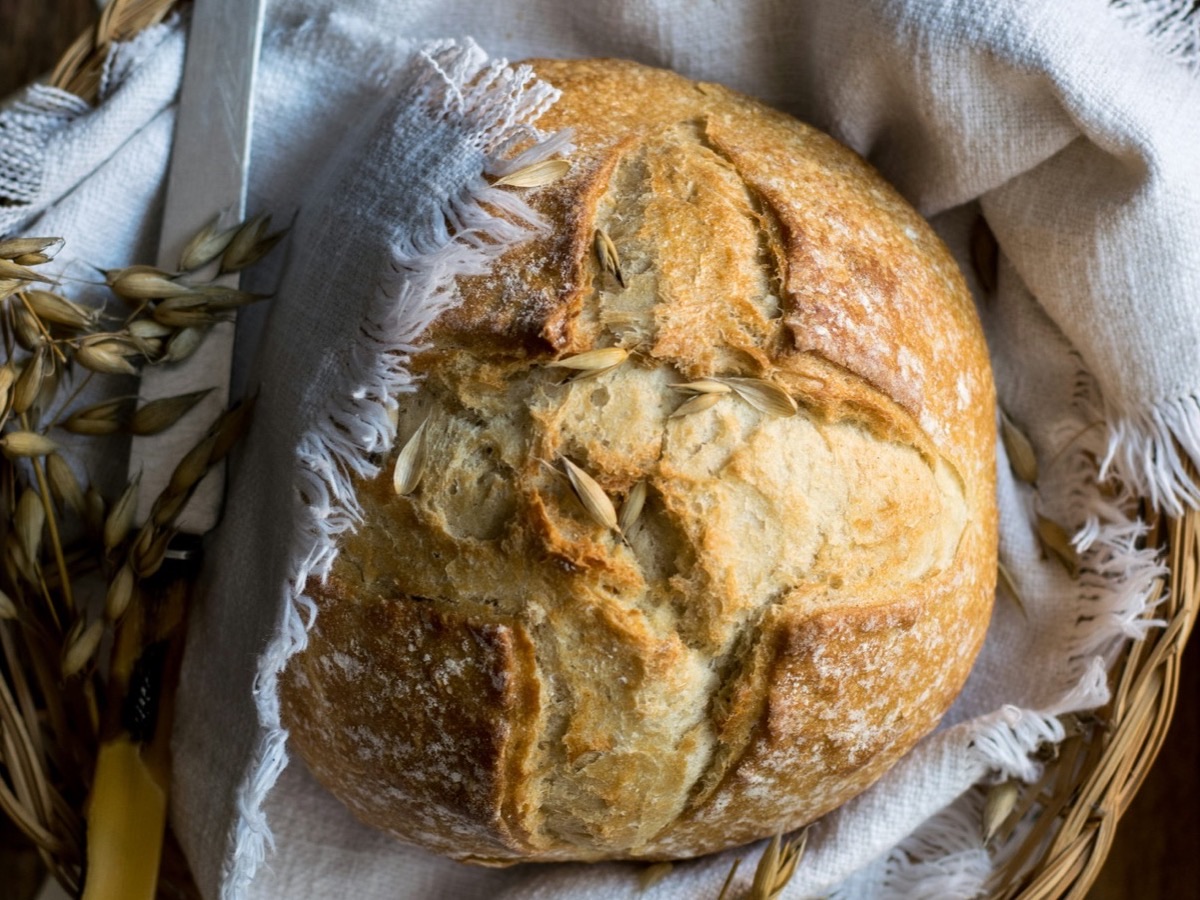
Cool it, wrap it, freeze what you will not eat. Keeping a week's bread is mostly a matter of timing and a clean tea towel.
Baking once and eating well for several days is not a compromise. It is the reason to bake a batch at all. Bread that keeps is bread you can rely on, and a little care after the oven is as important as anything that happened before it.
Cool it completely
Steam is the enemy of a crust. A loaf taken off the rack too early and bagged while warm will soften, then turn leathery by the next morning. Leave every loaf on a wire rack for at least three hours, and overnight for dense rye. A rack with air underneath is worth the space it takes. Only then is it ready to store or slice.
Choose loaves that keep
Sourdough keeps better than yeasted bread because its acidity slows staling. Rye keeps better still, and a dark, well-baked crust protects the crumb beneath. If the week is busy, bake two rye loaves and two wheat, and eat the wheat first. A tin loaf also keeps longer than a free-form one, simply because it has less exposed surface.
Cloth, paper and the freezer
Keep a cut loaf cut side down on a board, under a clean tea towel. For whole loaves, a cotton bag or a sheet of greaseproof paper is enough for a day or two, and a clean pillowcase works just as well in a pinch. Beyond that, slice and freeze. Put a sheet of baking paper between slices so they come apart, press out the air, and label the bag. Frozen bread keeps for three months and toasts straight from the freezer.
Do not keep bread in the fridge for more than a day. The cold speeds up staling, and the dry air does the crust no favours. A bread bin is useful only for whole loaves and only in cool weather; a cut loaf in a closed bin turns soft by evening.
Reviving a stale loaf
A loaf that has gone firm is not finished, and it is usually still good for something. Run it under the tap for a second, wrap it in foil and put it in a moderate oven for ten minutes. The crust will crisp and the middle will soften. It will never be fresh again, but it will be good. Older still, slice it thin and make toast, croutons or a bread salad with tomatoes and oil. A little oil and a hot pan will bring back more than you expect. A loaf that crumbles is ready for crumbs, and crumbs go in a jar for the next bake. Toast them dry first if you plan to keep them more than a day.
What not to do
Skip the plastic bag for a crusty loaf; it traps moisture and gives you a soft, sad shell. Skip the fridge. Skip the bread bin with a cut loaf in it, which is simply a humid box. And do not slice more than you need at once; every cut face is a place where the crumb begins to dry.
Check the loaf each morning. If the crust feels soft and the cut face has dried, it goes to the freezer that day, in slices, before the mould gets a say. Cool it, wrap it, freeze what you will not eat, and the last slice on Friday will still be worth toasting.