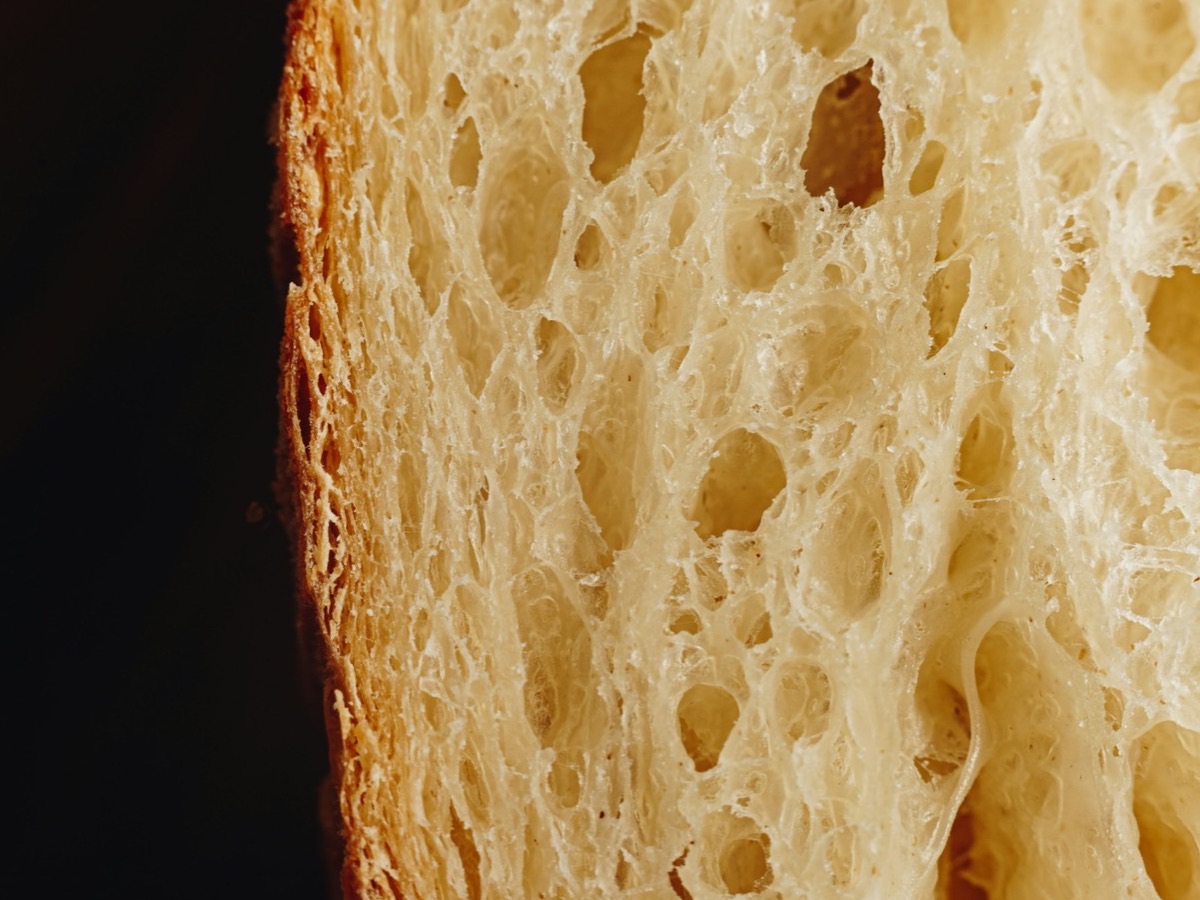
Flat loaves, dense bottoms, gummy slices. One likely cause at a time, a notebook, and no panic changes to the whole recipe.
Every baker has a run of bad loaves. Mine came in a cold February, five in a row, each one flatter than the last. The temptation is to change everything at once: new flour, new starter, new recipe. The faster route is to read the loaf, pick one likely cause, and change only that.
Read the loaf before the recipe
Where did it fail? A loaf that spread on the tray before it went in points to one set of problems. A loaf that rose in the basket and then collapsed in the oven points to another. A loaf with a dense band at the bottom is different again. Look at the shape, the crumb, the crust and the smell, and write down what you see before you eat the evidence.
Weather matters too. A dough that behaves in June will sulk in a January kitchen. Note the room temperature beside every bake, and treat a cold snap as a reason to slow down rather than to add yeast. An oven thermometer and a cheap room thermometer will tell you more than any recipe note.
Flat, spreading loaves
Usually the dough was over-proved or the starter was weak. If the dough felt slack and refused to hold a shape, the bulk went too long. If it held a shape but never rose, the starter was not ready. Feed the starter twice a day for three days, use it when it doubles within six hours, and shorten the bulk by twenty minutes.
A wet dough will also spread unless you build tension at shaping. If the dough is above seventy-five per cent hydration, give it an extra set of folds and a tighter final shape.
Dense bands and gummy slices
A dense band at the bottom is nearly always under-proving, or a cold kitchen. The dough was shaped before the gas had built, so the bottom stayed tight while the top expanded. Move the basket somewhere warmer, give the final prove another half hour, and check with a light press: the dough should spring back slowly and leave a shallow dent.
Gummy slices mean you cut it hot. Bread continues to cook as it cools, and the starch needs that time to set. Leave a loaf alone for at least two hours, and longer for rye. If the middle is still wet after that, the bake was too short or the oven too cool. Use an oven thermometer rather than the dial.
Bitter, boozy or acetone smells
The dough over-fermented. The yeasts ran out of sugar and the bacteria took over. Use less starter next time, keep the dough cooler, and shorten the bulk. A faint sourness is the point; a sharp solvent smell means the loaf is past its best before it is baked.
Keep notes
A notebook is the cheapest improvement you can make. Write the flour, the water, the room temperature, the timings and the result in one line. Patterns appear within a month, and the fix usually finds you. Photograph the crumb as well as the crust; the picture is quicker than the note. My February run ended when I moved the basket off the stone floor and started feeding the starter twice a day. Two changes, both obvious in hindsight, both invisible until I wrote things down.
Bad bread is not wasted effort. It is information, and it is cheaper than repeating the same mistake for another year.