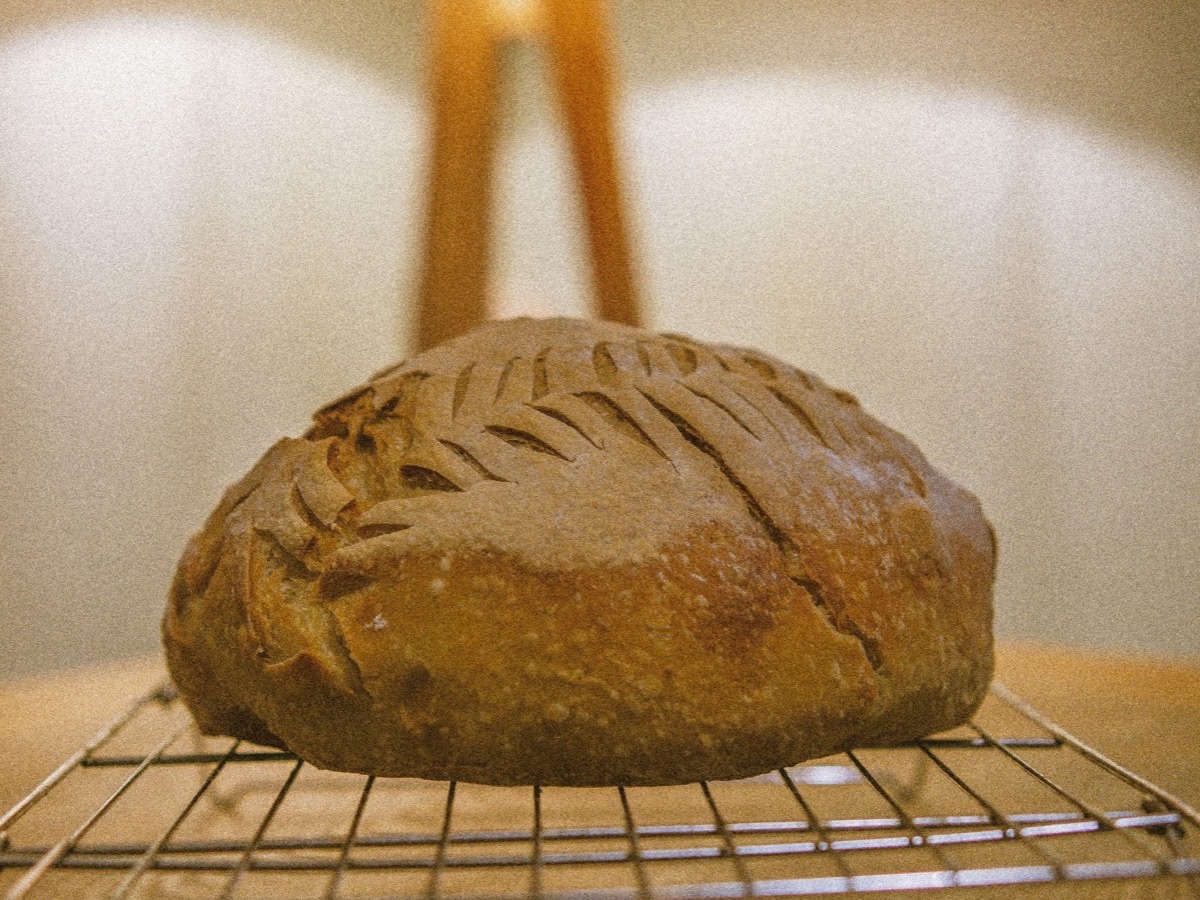
Long waits belong overnight, not at dinner time. A workable weekly schedule, a double batch and room to miss a Saturday.
For three years I baked on impulse, which meant I baked on Sunday afternoons and spent Monday wishing I had more bread and less washing-up. The change that made sourdough a lasting habit was not a better recipe. It was a schedule. Not a rigid one, but a rough shape for the week that put the long waits where they cost me least.
Why plan at all
A sourdough bake is mostly waiting. If you start when the mood takes you, the dough will demand attention at dinner, at bedtime, or in the middle of a work call. Putting the waits overnight and the handling in the early morning turns the same process into something that fits around a job.
The schedule also removes decisions. You do not stand in the kitchen at nine in the evening wondering what to do next; the next step is written down and already has a time beside it. On the days that go badly, the note is still there in the morning.
Which parts can move
The levain can be built the night before, at one part starter to five parts flour and five parts water. The bulk ferment can run while you sleep if the kitchen is cool, or in the fridge if it is not. Shaping can happen before work. The final prove can sit in the fridge all day. Only the bake itself needs a proper window at home, and that can be a weekend morning.
A working example
On Wednesday evening, feed the starter and leave it out. On Friday, mix the levain before bed. On Saturday morning, mix the dough, fold it three times over two hours, then shape and put the baskets in the fridge. Sunday morning, heat the oven, bake, and cool the loaves while you read the paper. Monday to Friday, eat.
That is four loaves from one bake, sliced and frozen in portions by Sunday evening. The active time is under an hour across the weekend. The rest is the fridge and the clock doing the work. A double batch means two kilos of flour and one bowl, not two of everything.
Batching without chaos
Mix one dough at double quantity rather than two separate bowls. Divide it at shaping. Keep a written note of what went in, because a double batch is exactly when you will forget the salt. Label the freezer bags with the date and the flour blend. Four loaves that taste the same are a week of lunches; four unlabelled bricks are an argument with yourself in November.
Cool every loaf completely before slicing. A warm loaf steams the bag, softens the crust and shortens its life by days. Lay the slices flat on a tray for twenty minutes before they go into the freezer, so they freeze separately.
Leave room for life
The schedule is a servant, not a contract. If Saturday disappears, put the dough in the fridge and bake on Monday. If the starter is sluggish, skip the week. The point is to make baking ordinary enough to continue, not to build another deadline. Write the schedule in pencil, not ink; the week has a vote too. A missed bake costs nothing but a few days without bread, and the starter will wait.
Once the rhythm is in place, the baking stops feeling like an event and becomes part of the week's furniture. That is exactly when it gets good.