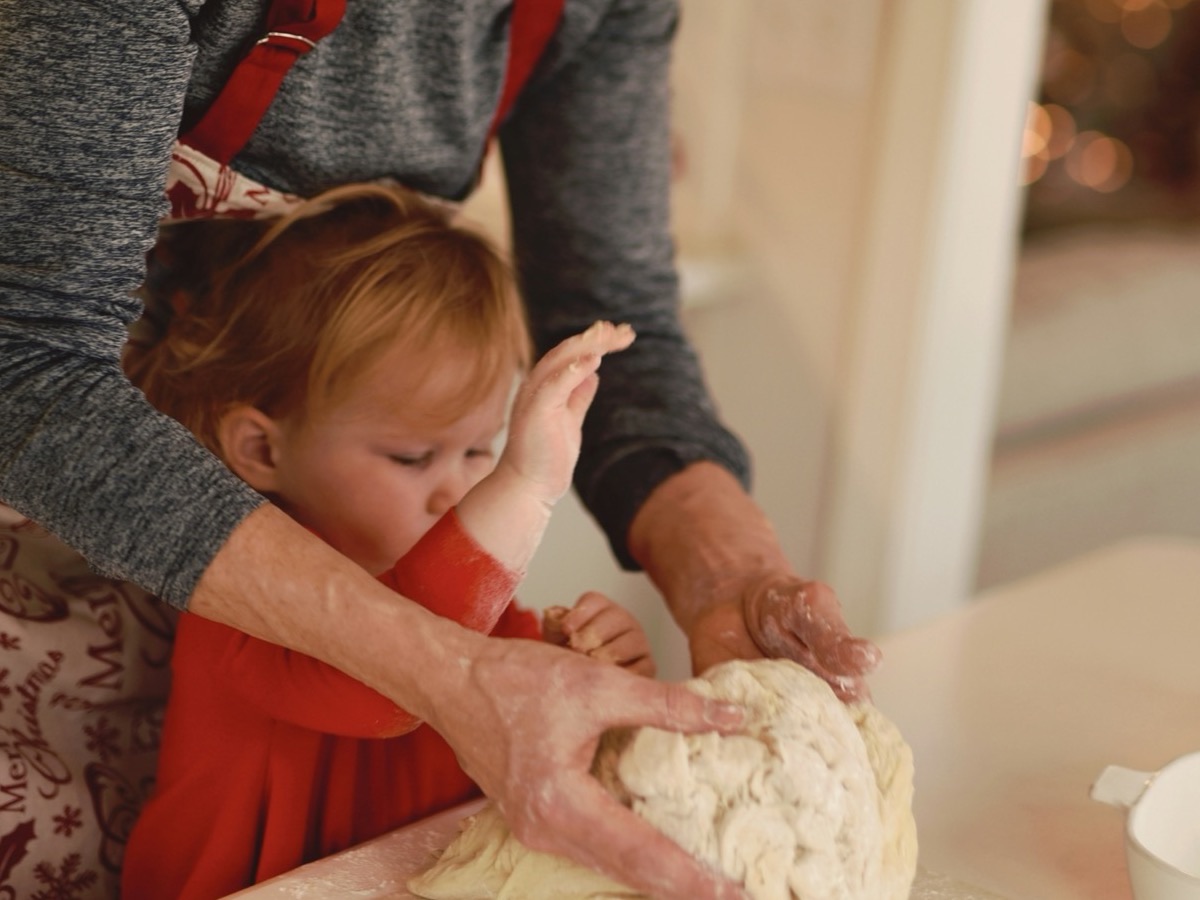
Tension, a firm seam and a basket lined before your hands get sticky. The two-minute job that decides how the loaf rises.
Shaping is the part of bread making that looks like a party trick and is really just housekeeping. A well-shaped loaf holds its gas, rises upwards rather than outwards, and opens along the score instead of splitting wherever it likes. A badly shaped one does the opposite, and no amount of oven heat will rescue it.
Before you touch the dough
Shape only after the bulk ferment is properly finished. The dough should look domed, feel airy and pull away from the bowl with a soft sigh. If it is still tight and springy, give it another twenty minutes. Lightly flour the bench, keep a bench knife and a small bowl of water nearby, and have your proving basket lined and dusted before your hands are covered.
Work quickly but without panic. Shaping is a two-minute job, and most of the damage comes from handling dough that is wetter than the baker expected. Wet hands, a dry bench and a light dusting of flour are the whole toolkit.
Tension comes from the surface
Tip the dough out gently. Pat it into a rough rectangle, pressing out the biggest gas bubbles at the edges. Fold the left third into the middle, then the right third over that, then roll from the top down. With each roll, drag the dough a few centimetres towards you against the bench. That drag is what tightens the outer skin. Use flour sparingly; too much and the dough skates instead of gripping.
Turn the dough ninety degrees and repeat the drag a few times. You are looking for a smooth, taut top and a seam that holds together. If the skin tears, rest it for five minutes and carry on. A tear is a sign the gluten needs a moment, not a reason to start over.
Round or oblong
A round suits a basket and a loaf cut into wedges. An oblong suits sandwiches and a tin. Choose before you start, because the motions differ. For an oblong, roll the dough away from you into a log and pinch the seam firmly along its length. For a round, cup the dough with both hands and draw it in circles towards you until the surface is tight.
Into the basket
Place the loaf seam side up in the basket, or seam side down on a lined tray if you are baking free-form. Cover and prove. A shaped loaf needs less time than an unshaped one, often forty-five minutes to an hour at room temperature, or overnight in the fridge. Chill it well and it will hold its shape through the transfer and the score.
Dust the top with rice flour, not white flour, which burns before the crust is done. When it comes to the bake, tip it out onto hot parchment in one confident movement and score it straight away.
What a tight shape actually does
It gives the expanding gas a direction. It keeps the crumb even instead of honeycombed with caverns. It makes the loaf look deliberate. It is also easier to score cleanly, which makes the bake calmer. None of this requires strength; it requires a surface pulled taut and a seam that stays where you put it.
Practise on a bowl of flour for ten minutes if you like. The motions are the same, the mess is smaller, and the improvement in your next loaf will be immediate.