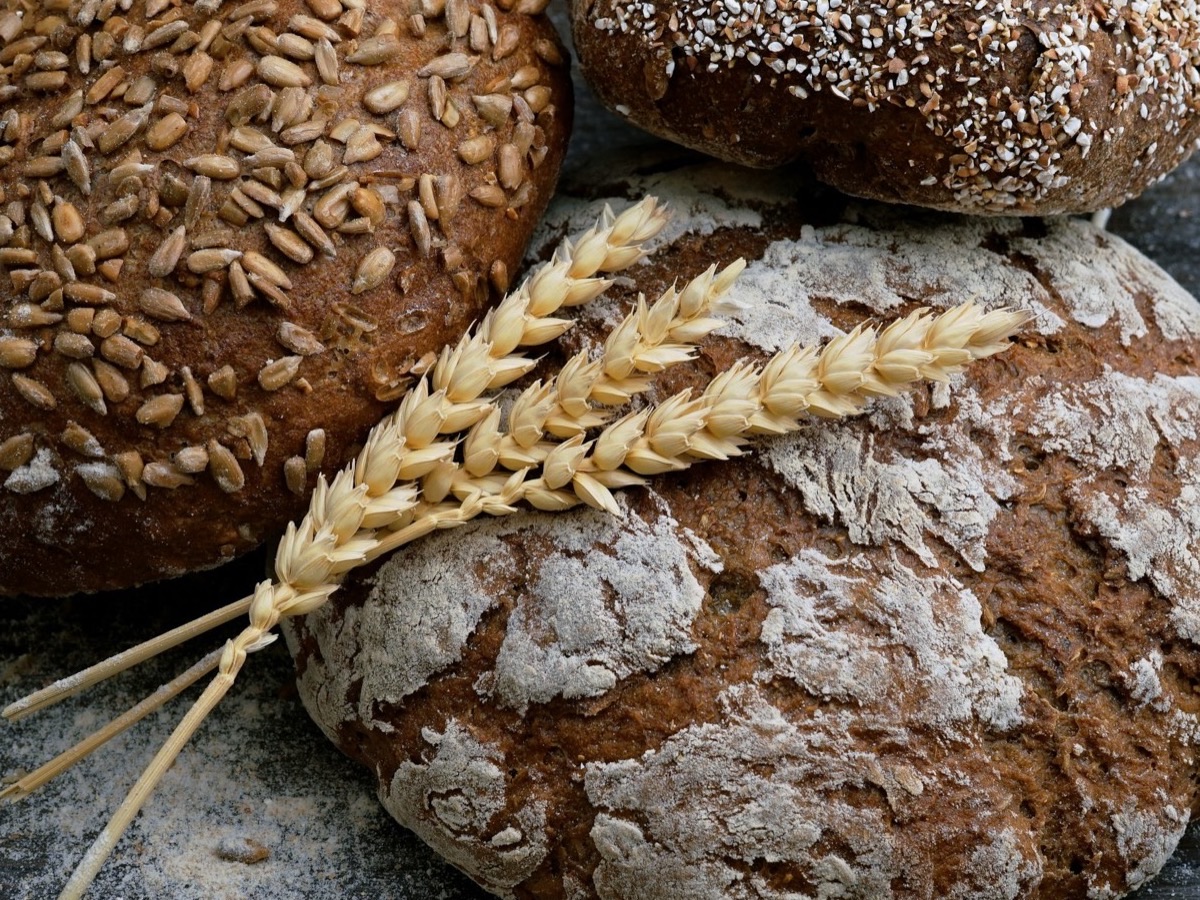
Rye has little gluten and a lot of character. A blended loaf, a hot tin and a long bake — and why a close crumb is not a failure.
My first rye loaf could have been used as a doorstop. It was dark, close-textured and tasted fine, but I had spent the whole bake apologising for it in my head. Rye does not behave like wheat, and for a long time I treated that as a problem to solve. The better approach was to stop expecting wheat behaviour from a grain that has almost none of wheat's gluten.
Why rye is different
Rye contains very little glutenin and gliadin, the proteins that build wheat's elastic network. What it does contain is a great deal of pentosan, a sticky carbohydrate that grabs water and turns the dough into a paste. You cannot knead rye into a windowpane. You can only give it structure through a tin, a hot start, and a long, slow bake.
The grain also carries more enzymes than wheat, which is why a long ferment can turn it gluey. Keep the starter modest, keep the dough cool, and do not stretch the bulk ferment beyond what the dough can hold. If the dough starts to look wet on top after two hours, it is telling you to stop.
Start with a blend
Pure rye is worth making once, in a small tin, with caraway and a lot of patience. For a loaf you will eat every day, blend it. Seventy per cent strong white wheat and thirty per cent wholemeal rye gives enough wheat structure for a proper rise and enough rye for the flavour to be unmistakable. A spoonful of dark treacle deepens the colour without making it sweet, and a teaspoon of caraway seeds belongs in the same bowl.
Watch the water
Rye wants less water than wheat, because the pentosans already hold so much. Take your usual hydration down by ten per cent and add the rye after the wheat has been mixed. The dough will feel like thick porridge. Wet your hands rather than flouring them, and fold it in the bowl instead of kneading on the bench. Three or four folds over the first hour are enough; after that, leave it alone.
The bake is where the structure comes from
Put the dough straight into a greased, lined 900-gram tin. Prove it until the surface shows small cracks and the top has risen close to the rim, then bake at 240 degrees Celsius for fifteen minutes and at 200 for another forty. Rye needs a longer bake than wheat to set its crumb. If the top darkens too quickly, lay a sheet of foil over it.
Leave the loaf in the tin for ten minutes before turning it out, and then cool it completely on a rack. Cutting a rye loaf warm gives you a gummy middle and a false impression of failure. Wait until it is cold, ideally the next day, before the first slice.
What the loaf is good for
A blended rye is superb toasted, sliced thin under cheese, or torn beside soup. It keeps longer than white bread and freezes well in half loaves. The crumb is close and the crust is dark, and neither is a defect. It is simply a different bread, with a longer memory of the field in it. A thick slice under a fried egg on Sunday is reason enough.
I still make the occasional brick. Now I slice it, toast it, and say nothing apologetic at all.